


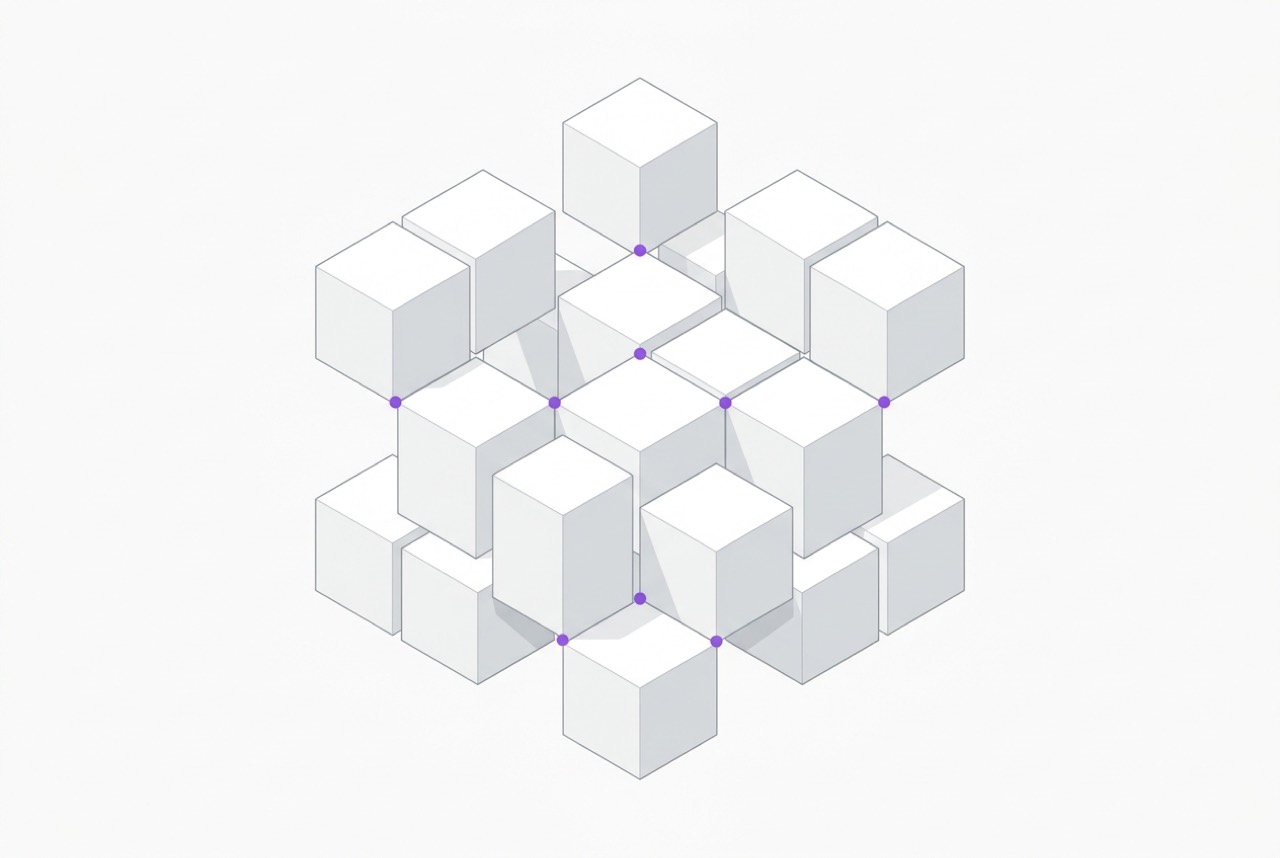
The problem was not the quality of the proposal. It was upstream: that client's Go-to-Market strategy was built around a single interlocutor. All marketing activities, all content, all sales preparation were oriented toward one person. The actual buying group was composed of six.
This is not an isolated case. It is the norm in B2B.
According to the LeanData GTM State of Efficiency Report, the B2B average now sees 10 stakeholders involved in every purchase decision. Each consults different sources, has different priorities, and is at a different stage of the decision-making process. The buyer persona, the tool upon which most Go-to-Market strategies are still built, represents just one of these ten. The other nine exist, participate, and often decide. They are simply not on the radar.
The buying group exists. Go-to-Market ignores it
The buyer persona concept has played an important role in modern B2B marketing development. It helped teams move away from generic communication, think in terms of specific problems, and build more relevant messages. The point is not to abandon it. It is to understand where its utility ends and its limitation begins.
"A buyer persona describes an individual. A B2B purchase decision involves a group. Group dynamics cannot be derived by simply multiplying the characteristics of a single person."
In the buying group, there are different roles: who identifies the problem, who evaluates the solutions, who blocks or unlocks the budget, who has to use the product, who signs. Each has a different priority, a different language, and a different moment they enter the process. A Go-to-Market (GTM) strategy that treats them all as variations of the same profile loses the complexity that truly governs the decision.
The result is common. Great content for those who evaluate the solution technically, but no material for those who must justify the expenditure to the board. Precise campaigns for those who identify the problem, but no touchpoint for the signer. The sales rep arriving at negotiations with a convinced champion only to discover there is another stakeholder they have never heard of.
What changes when Go-to-Market starts from the group
Designing a GTM strategy around the buying group doesn't mean creating ten distinct buyer personas and producing content for each. It means asking a different question before building any activity: who is involved in the decision, in which phase, and with what priority?
The answer to this question changes almost everything.
It changes how content is built. It's not about having more variations of the same piece. It's about understanding that the CFO who must approve the spend needs a completely different perspective than the IT manager evaluating technical integration. Same company, same deal, completely different registers.
It changes how the sales sequence is structured. In a complex sales process, the sales rep must know who is talking to whom within the account and when to introduce the right stakeholders. A well-designed Go-to-Market strategy provides this map rather than leaving it to the intuition of the individual account executive.
It changes how results are measured. Data published in the Harvard Business Review shows that the B2B buyer journey averages over 28 touchpoints before a purchase decision, distributed across different stakeholders on different channels. Measuring only the champion's touchpoints does not reflect how the decision was formed. And without that map, it is hard to tell what worked and what created friction.
Implications for strategic planners
Shifting from buyer persona-centered logic to buying group-centered logic is not a minor detail. It is an architectural shift that touches multiple levels.
On positioning: the company's core message, what appears in campaigns, events, the website, must be understandable and relevant to the entire spectrum of stakeholders involved in the decision. It cannot be optimized solely for the person who identifies the problem. It must also hold up before the budget controller, the risk evaluator, and the implementation driver.
On sales enablement: sales reps must have tools for every stakeholder in the group, not just their main contact. This means role-specific materials. A document explaining the business value for the CFO is different from one describing the technical specs for the IT team. Both must exist, and be ready before they are needed.
On events: the right question is not "who do we want to invite?" but "which role in the buying group do we want to reach, and with what message?" A well-designed event can be one of the most effective tools for building relationships with stakeholders that reps struggle to reach directly. But only if designed with this logic, not as a generic visibility event.
Want to learn more?
Are your sales reps still talking to a single point of contact? Map the actual B2B buying group (CFO, CTO, CEO, end user) to prevent late-stage deal blocks. Discover our training and execution frameworks to align marketing and sales teams. Explore our Go-to-Market Academy